
Vita3K Android Setup Guide
Table of contents
Best devices for Vita on Android
If you’re curious what the best devices are, here’s a few of my top picks:
- Snapdragon 8 Elite Device! AYN Odin 3 – (Review)
- Best All-Rounder Device! AYN Odin 2 Portal – (Review)
- Dual Screen Device! AYN Thor – (Review)
ROMs
So right off the bat, you are of course going to need Sony PlayStation Vita games if you plan on following this guide, and I would suggest just simply creating a ROMs folder on your internal storage or SD card (recommended), and then a psvita folder inside of it, where you will put your Sony PlayStation Vita games.
As far as finding the games yourself, the video below should help, otherwise what you’re looking for is USA NoNpDRM ZIP games.
Installation
Let’s go ahead and download and install Vita3K.
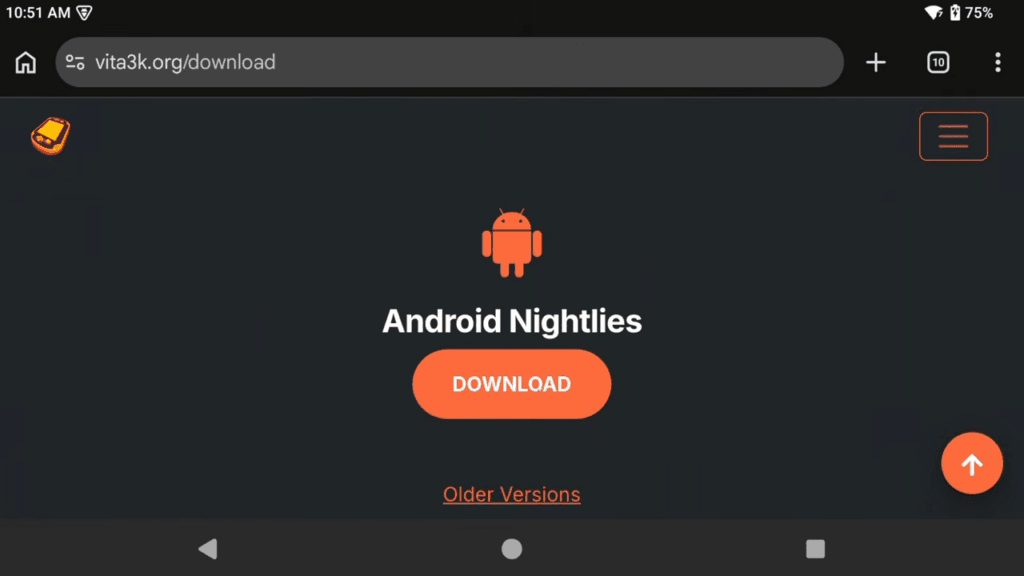
Head to Vita3K.org, the website for the emulator, and click the menu top right then click Download.
Choose Android Nightlies and it will download the APK for us.
Go ahead and click Next.
Installing Firmware
And first thing we need to do is install firmware, thankfully with Download links to each right there on the screen.
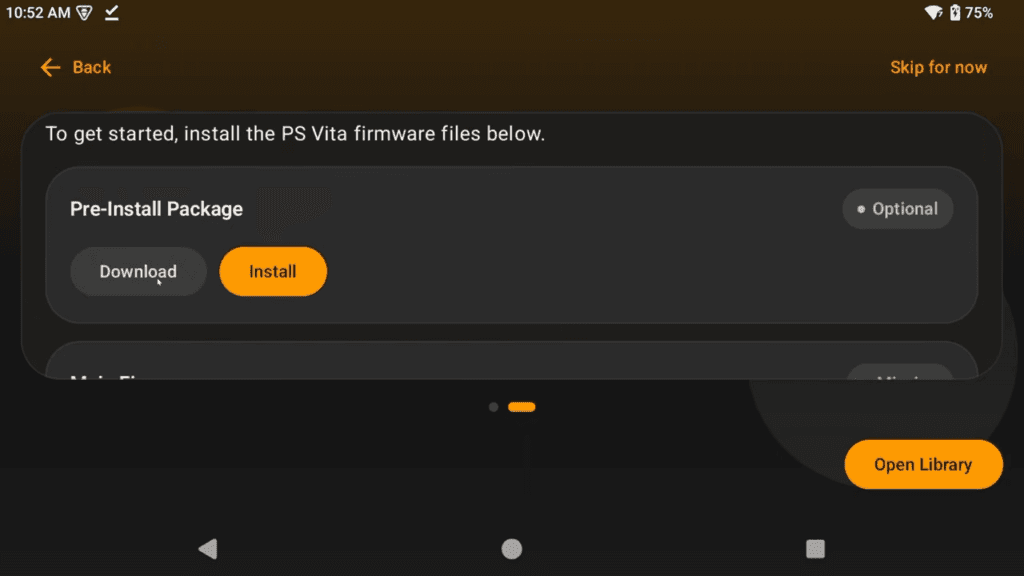
So click Download for Pre-install Package, and on the bitly page, I usually push and hold on the link and select Open in new tab in Google Chrome, that let’s the download start.
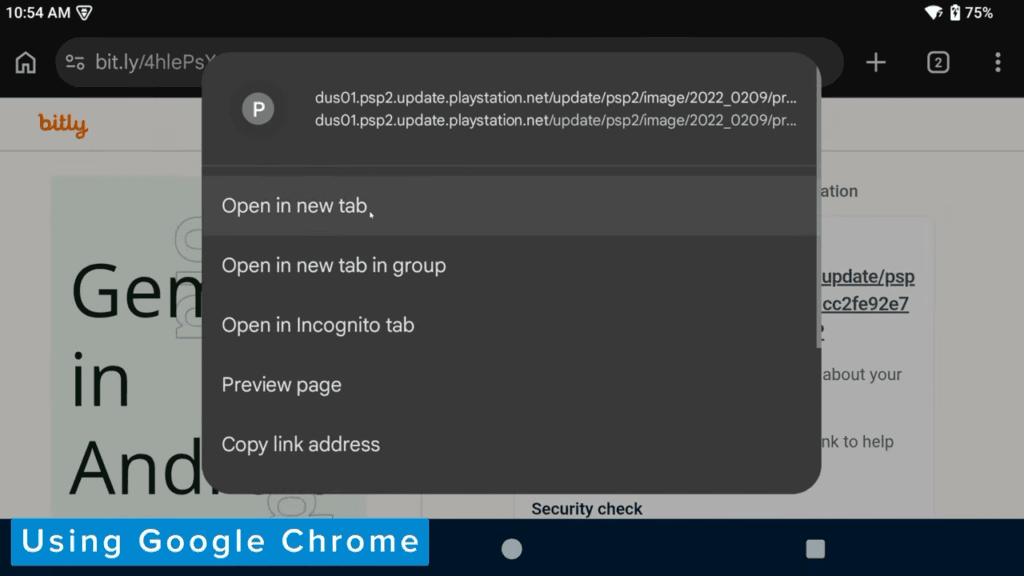
I’ve had issues getting the download any other way, but that is the best way to do it.
If it wants to download with a .txt at the end of the file, you will have to go rename it and remove the .txt using any file manager.
Go ahead and click Install, then allow permission if it asks, and navigate to the file we just downloaded and select it.
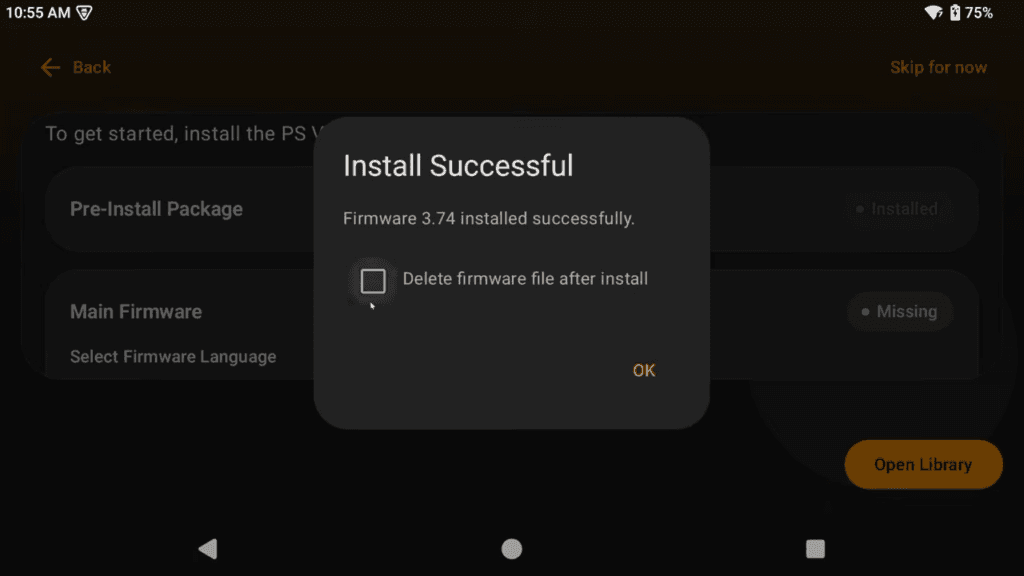
I would highly suggest not choosing to Delete firmware file after install as we may need it later.
Repeat the same steps for the Main Firmware and the Font Package.
For Main Firmware, just scroll down to Download update and Download, same thing with renaming.
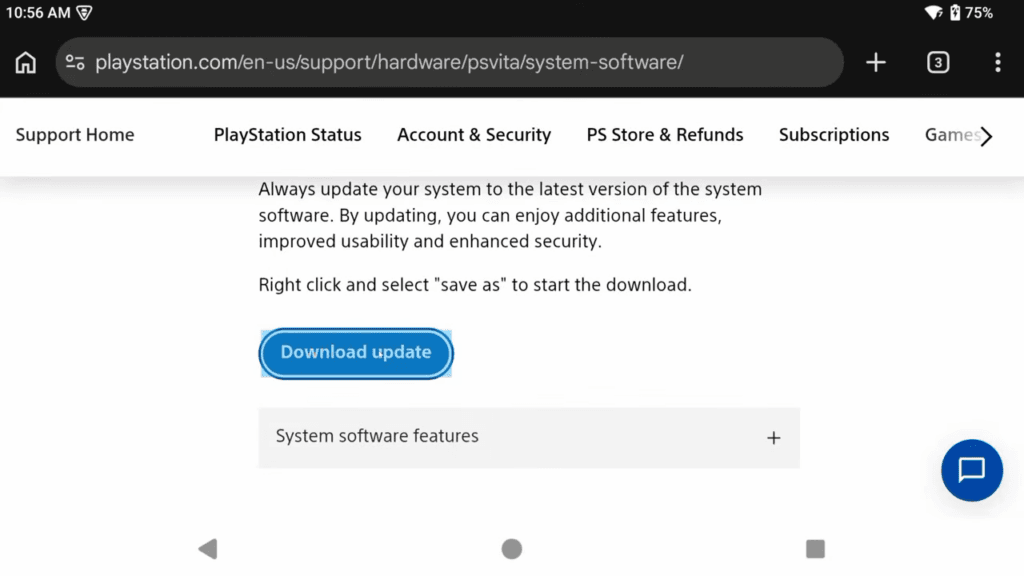
The steps to install the Font Package would be the same as the first firmware we installed.
So click Download for Font Page, and on the bitly page, I usually push and hold on the link and select Open in new tab in Google Chrome, that let’s the download start.
Finally after installing all three and it says Installed, click Open Library.
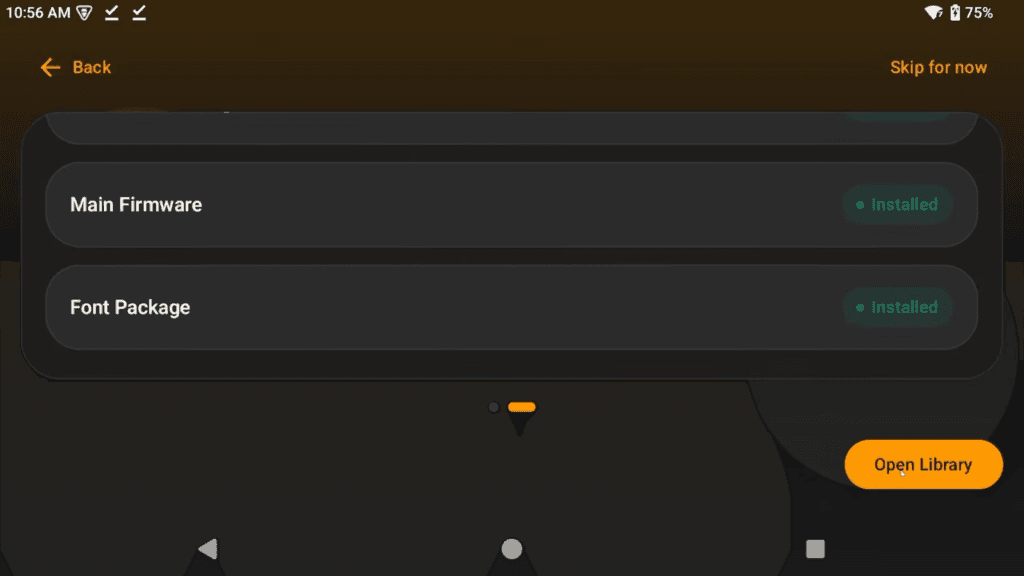
Storing Vita3K data
The very first thing to do now before anything else is decide where you want to store all the Vita3K data.
Games, updates and DLC can get large, so I choose to store it all on an SD card – it also helps make it portable too for other devices.
I would even still do this without an SD card as by default Vita3K is behind Android’s data storage which a lot of devices can’t access, so it’s best to put this on the root of your internal storage if you have no SD card.
Click the Settings cog, and scroll over to Emulator.
Scroll down to Emulated System Storage folder and select it.
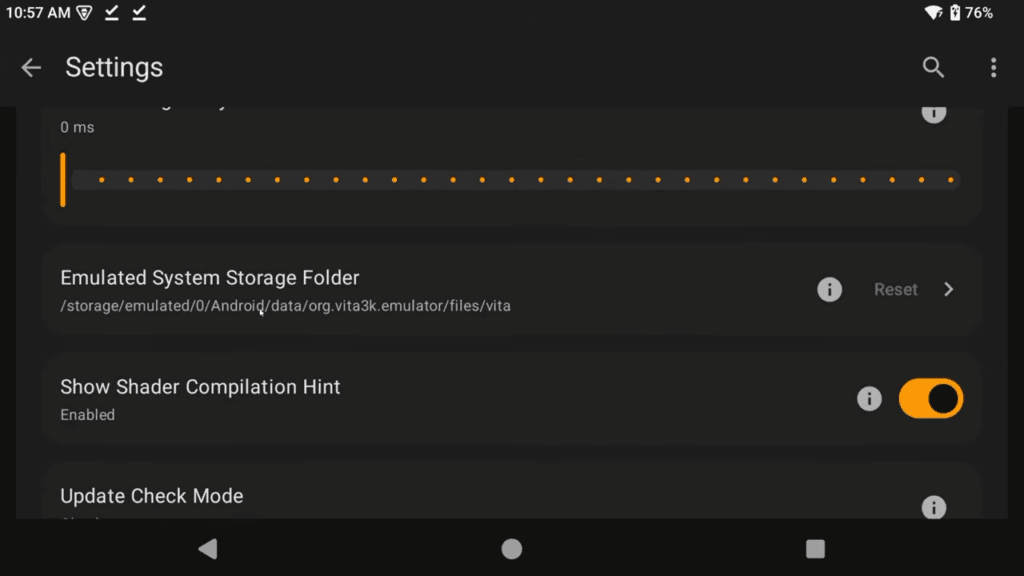
Head to your SD card or internal storage and create a folder called Vita3K on the root then select use this folder.
Click OK.
Go ahead and completely close Vita3K and reopen it.
It may ask you to reinstall some firmware files, so go ahead and click Install Firmware, Firmware PUP and reselect your firmware files to reinstall them.
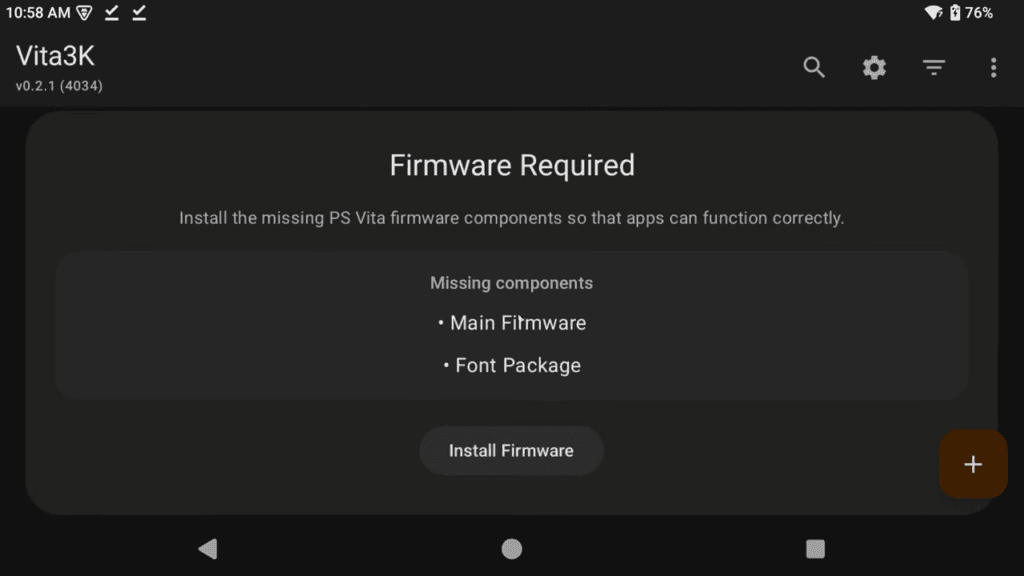
Installing Games, updates or DLC
Let’s install our first game, so click the Plus icon bottom right.
Some games can come as pkg files, or zip or vpk.
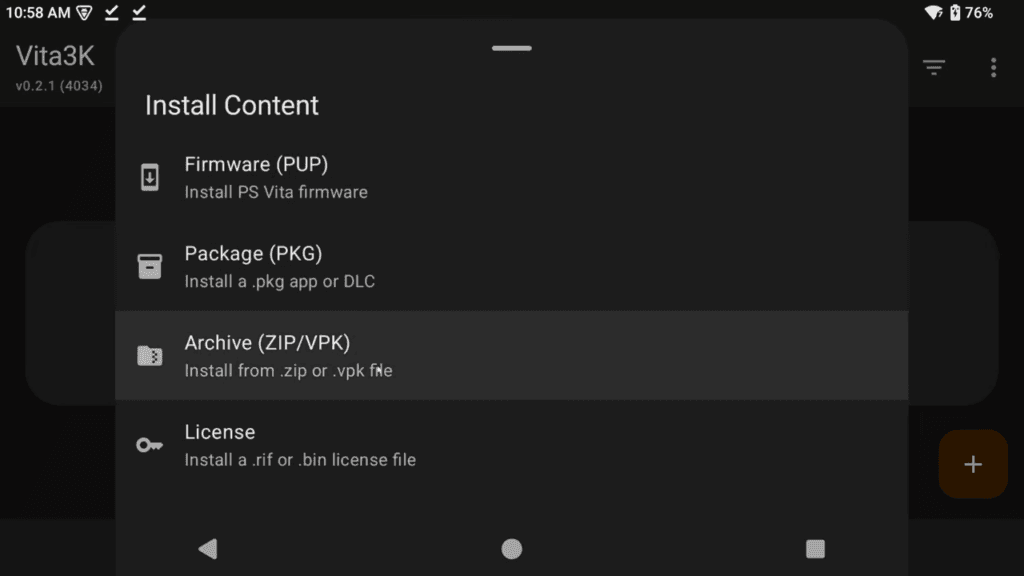
So select which matches your ROM type, then navigate to your ROM and select it to install it.
Mine are in zip for this video.
You can install updates and DLC the same way for your games.
I’m going to assume you’ve installed at least one game moving forward.
Controls
Go ahead and click the Settings cog at the top and head to the Controls tab.
If you’re using a controller or handheld, turn off Show On-Screen Controls.
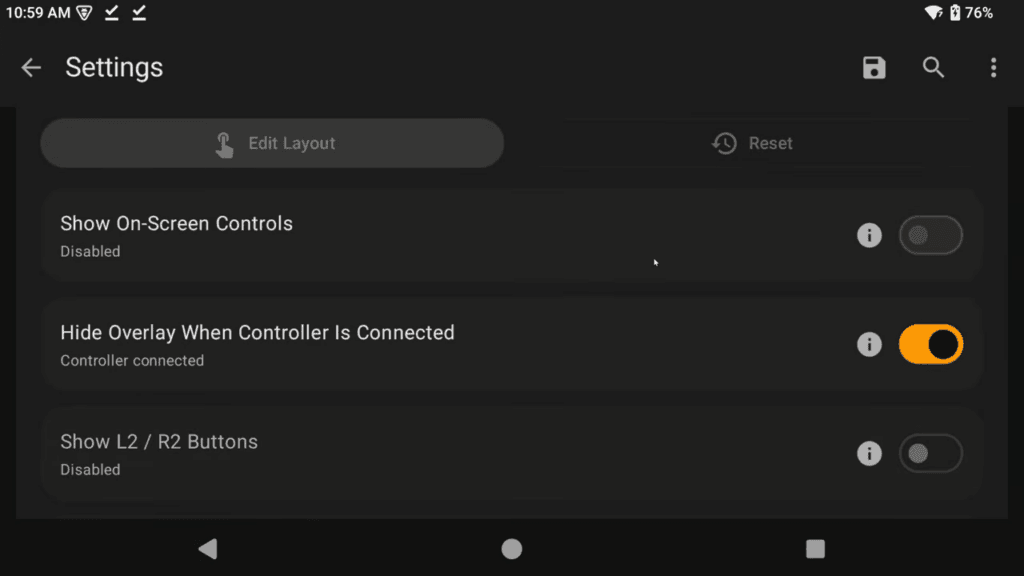
Scroll down to Connected Controllers and if may have mapped the controls automatically, but if not, you can go through one by one to map the controls to your controller or handheld.
If you have a back button, you can use that for PS otherwise not super necessary.
Performance Overlay
Lastly head to the Emulator tab and scroll down and enable Performance Overlay if you want to see how the games are performing.
Back to the main menu, make sure to Save and Exit.
Per-Game Settings
Now, you may have noticed we skipped over a lot of settings, namely graphic ones and there’s a specific reason for that.
We want to leave everything as default and now adjust games on a per-game basis.
So push and hold on a game, and choose Custom Config.
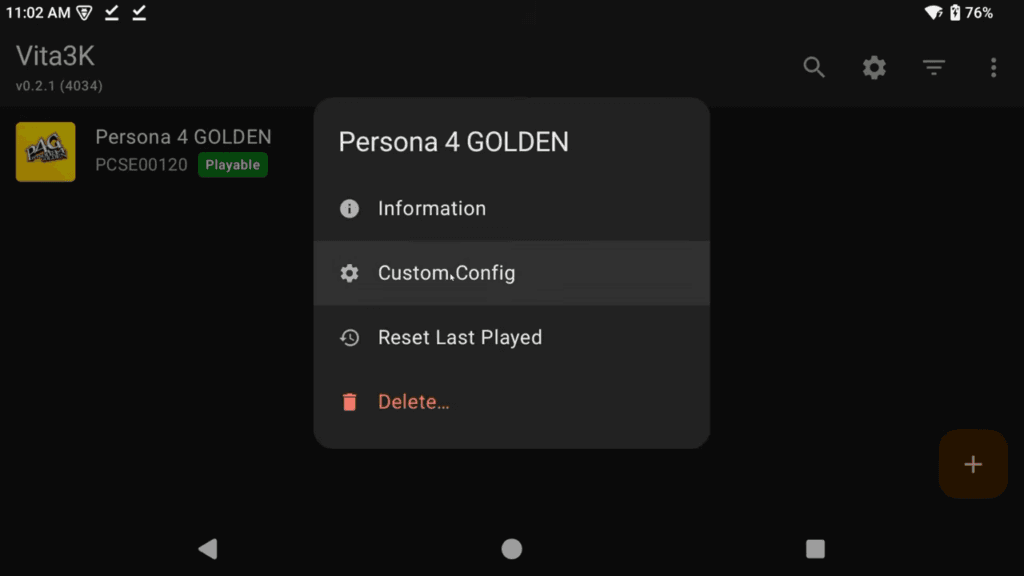
Now, any changes made here only apply to this specific game – so super useful for troubleshooting any games that may need specific settings.
Custom Drivers
But head to the Graphics tab.
Scroll down to Custom GPU Driver.
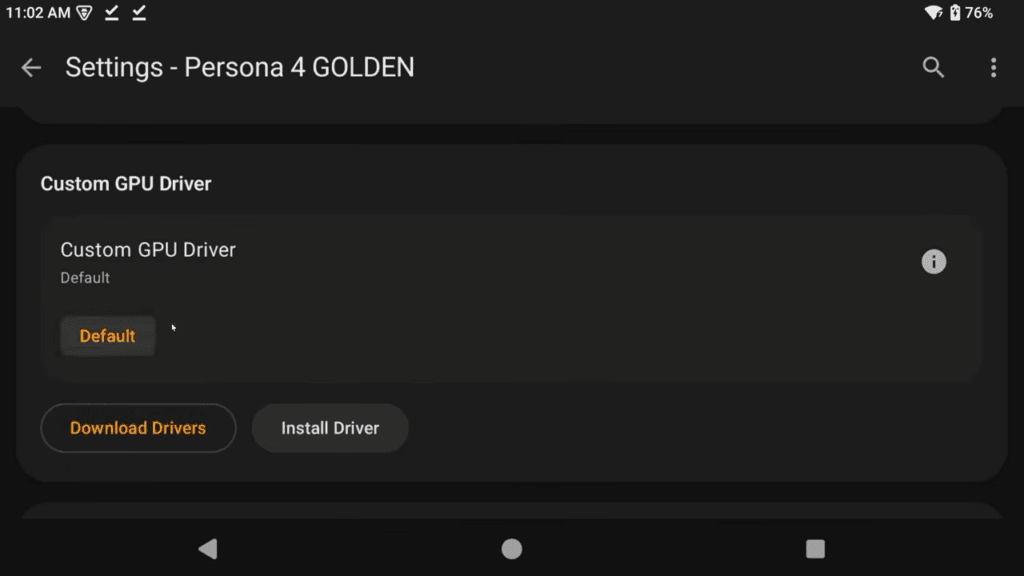
If you have a Snapdragon device, you can choose to install custom drivers that may or may not improve the performance of the game – it’s hit and miss depending on the game.
This is more advanced for advanced users so if this all doesn’t sound familiar, then you should skip this part.
Upscaling
Under that, you can set upscaling if you want – maybe the game is easy to run and you want to upscale it to 2x and so on for better visuals.
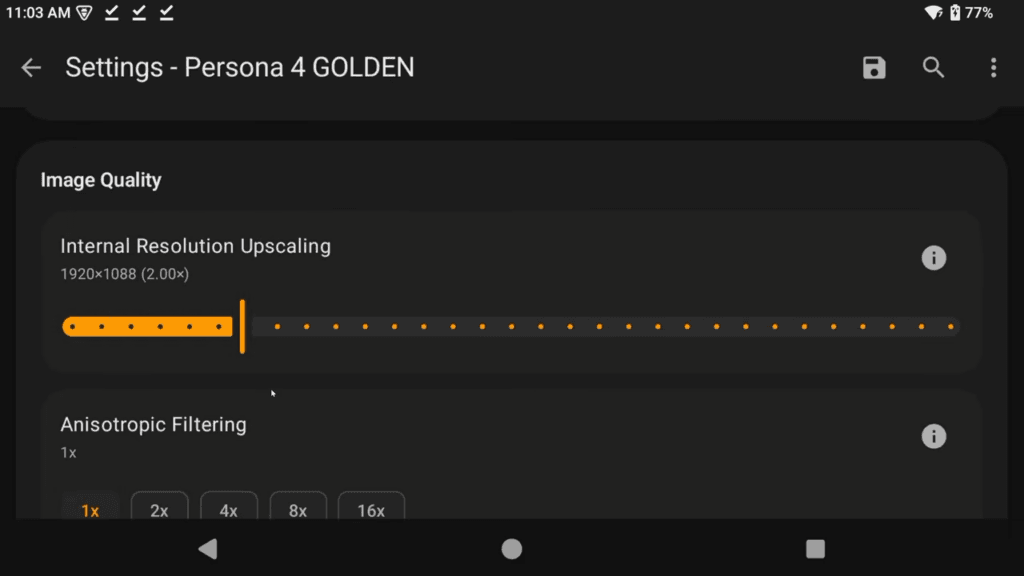
Some games may require some additional settings to change depending on the game.
Back out and make sure you save again.
In-Game Menu
Just tap on the game to start it, and then click the Start button to actually start it.
Then just have some fun and play the game.
If you swipe up and use the back arrow, or Back button on your handheld or back gesture, you’ll get the in-game menu.
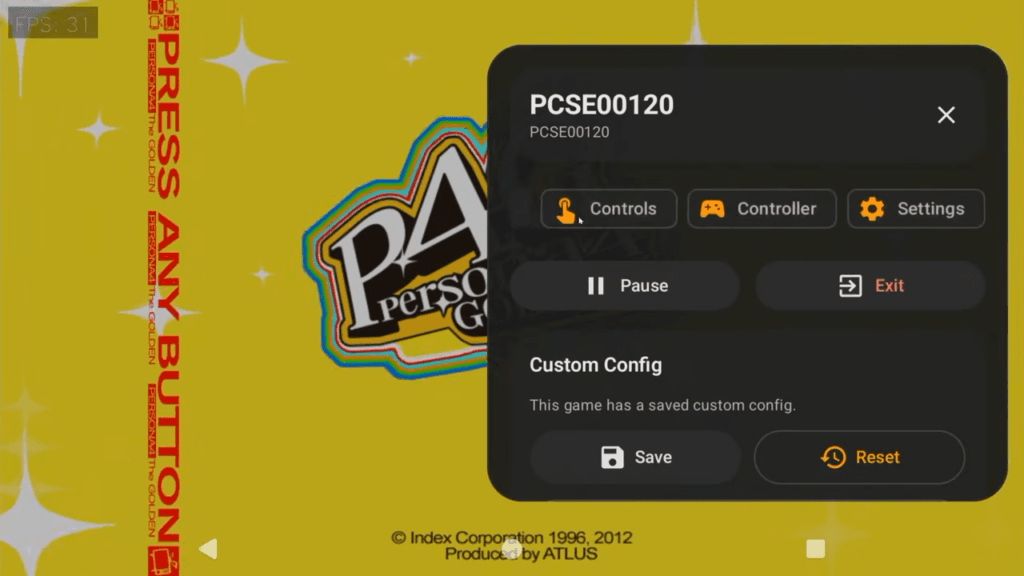
You can adjust settings on the fly if you want for this specific game.
You can also Exit the game using this menu.
Where is your data?
Alright, as promised, let’s take a look at where all of your data is saved.
Head to your file manager, and then either the internal storage or the SD card, wherever you created that Vita3K at the start of today’s guide.
Then, inside of the ux0 folder.
Now, there’s a few folders in here that are important.
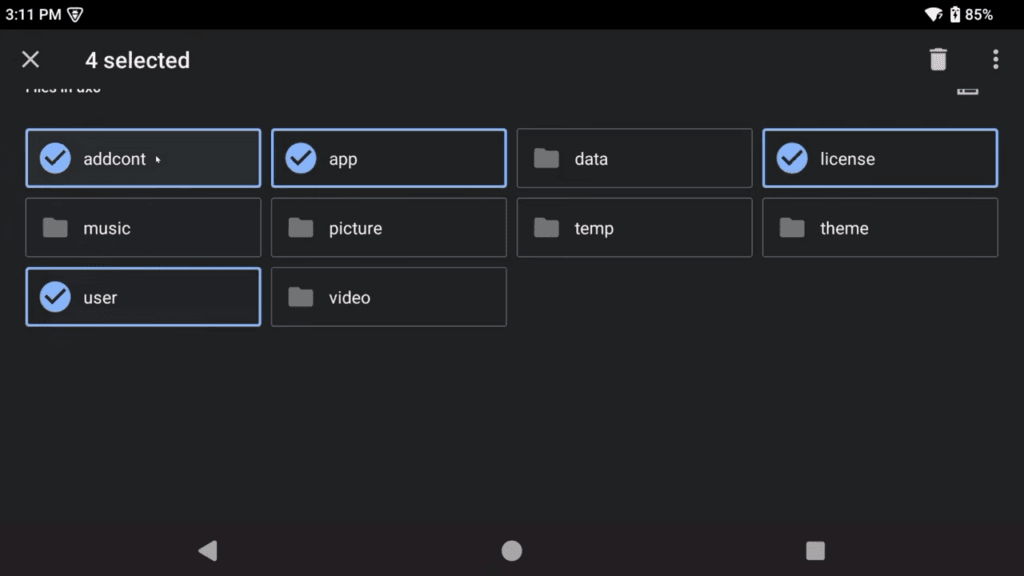
- addcont folder which would have your updates and DLC if you installed them. They’re separated by the title ID of the game.
- app folder is where your games got installed to, so if you head inside of it, you’re going to see all of the title id’s which are the games.
- license has files connected to the games that let them run properly.
- user folder has all of your save data.
The best part about this emulator, is if your Vita3K folder is on the SD card, when you move the SD card to another device, you can install Vita3K again, choose the existing folder on your SD card, and you’ll have all your games, updates, DLC and so on all ready to go – no need to reinstall or do anything.
Syncthing
Alternatively, for those that use Syncthing, if you sync these folders across devices, it’s the same idea – extremely useful and saves a ton of time.
This is why you don’t need the original ROMs, updates or DLC files – once you install them once, you have them forever ready to go.
1 comment
Do you happen to know how to get the joysticks to work? I’m on the Thor and Vita3k won’t recognize any joystick input.